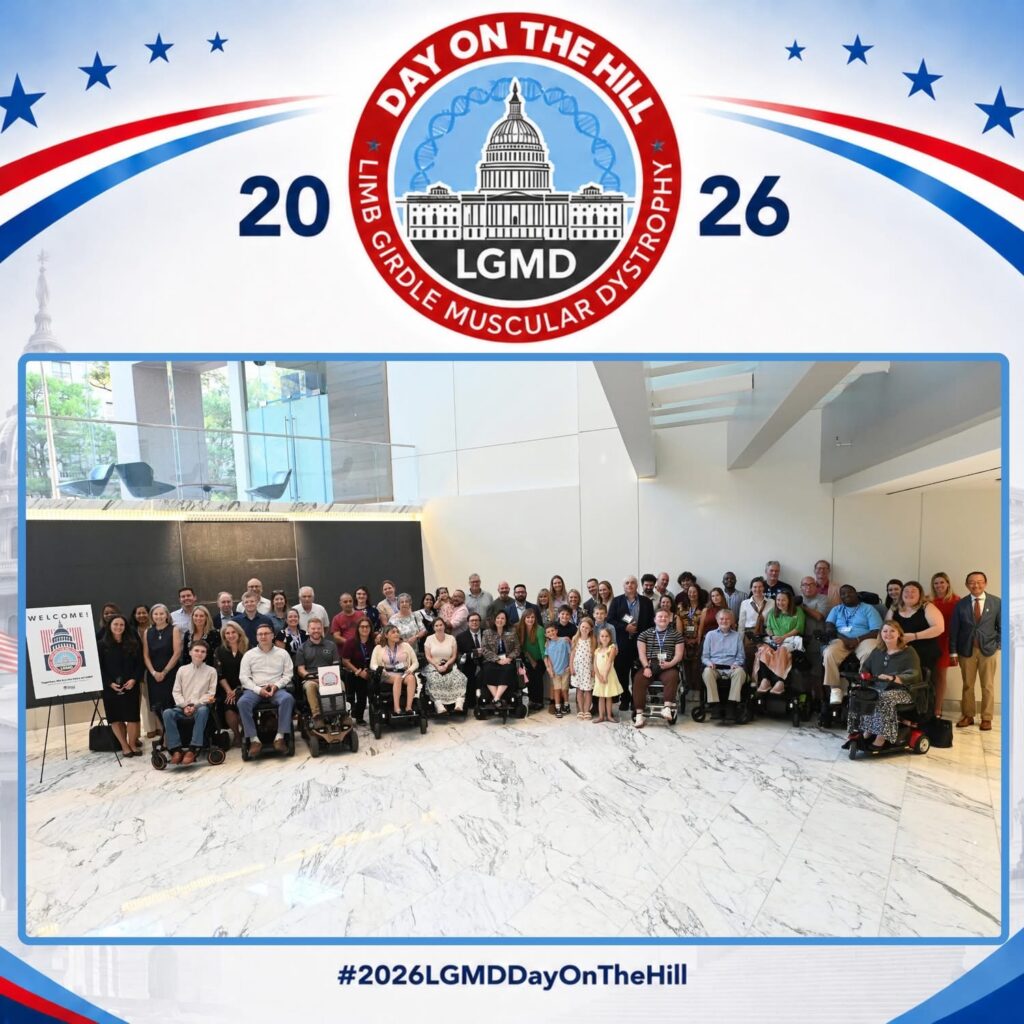
C3 was proudly represented in Washington, D.C. at the 2026 LGMD Day on the Hill, hosted by The Speak Foundation. C3 Advocacy Chair Melina Garza was selected as a 2026 delegate and had the privilege of leading the Texas and North Carolina delegation through a packed day of advocacy on Capitol Hill.
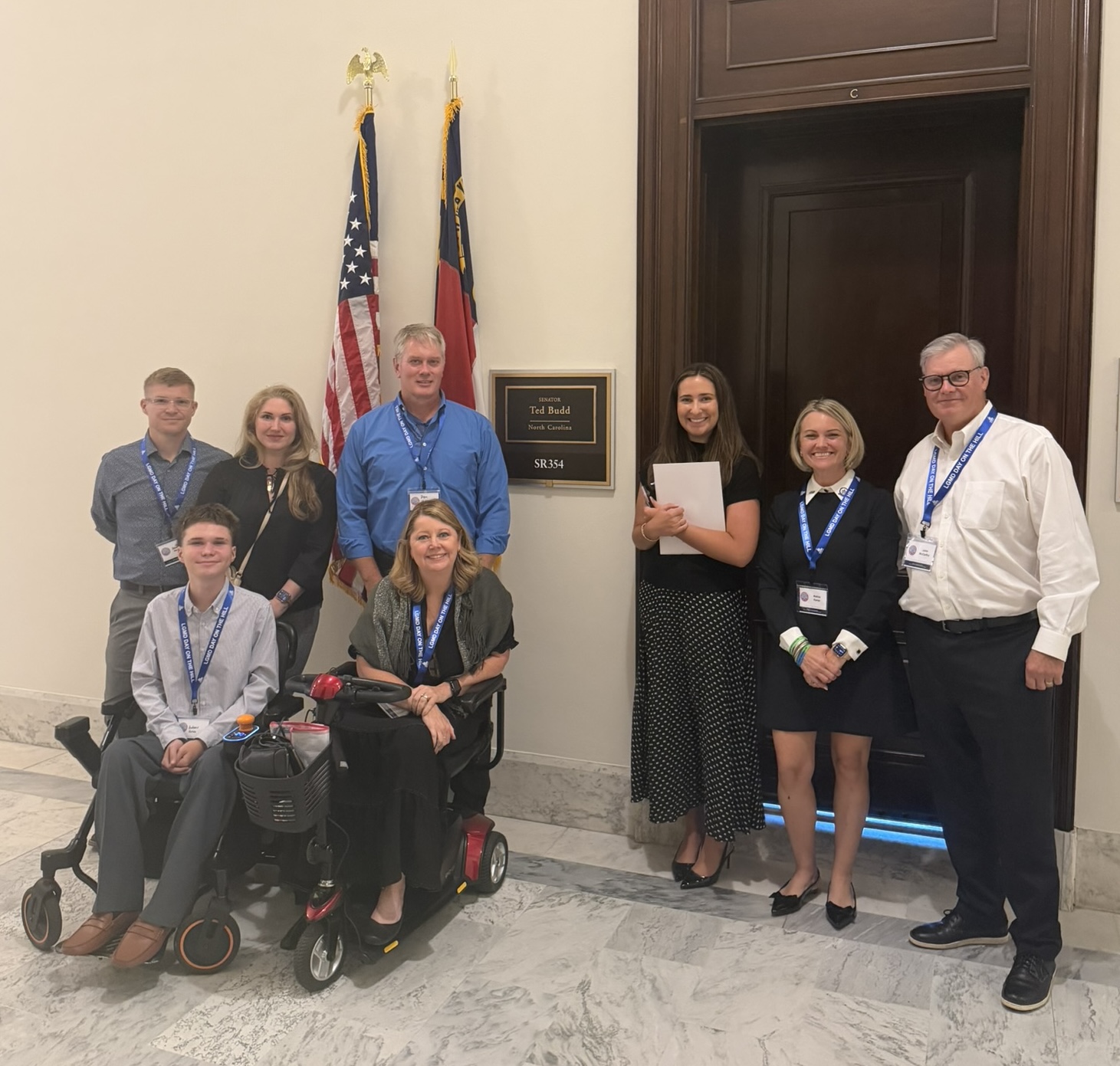
The day began with a special recognition of congressional leadership in rare disease. Melina joined The Speak Foundation in presenting Congressman John Joyce, M.D. (PA-13) with a 2026 Congressional Champion for Limb-Girdle Muscular Dystrophy Award, recognizing his leadership supporting rare-disease drug development. From there, the Texas and North Carolina delegation continued through meetings with the offices of Rep. John Carter (TX-31), Rep. Deborah Ross (NC-02), Sen. Ted Budd (NC), Sen. Thom Tillis (NC), Sen. John Cornyn (TX), and Sen. Ted Cruz (TX) making for seven Capitol Hill stops in one day when including the morning Congressional Champion presentation.
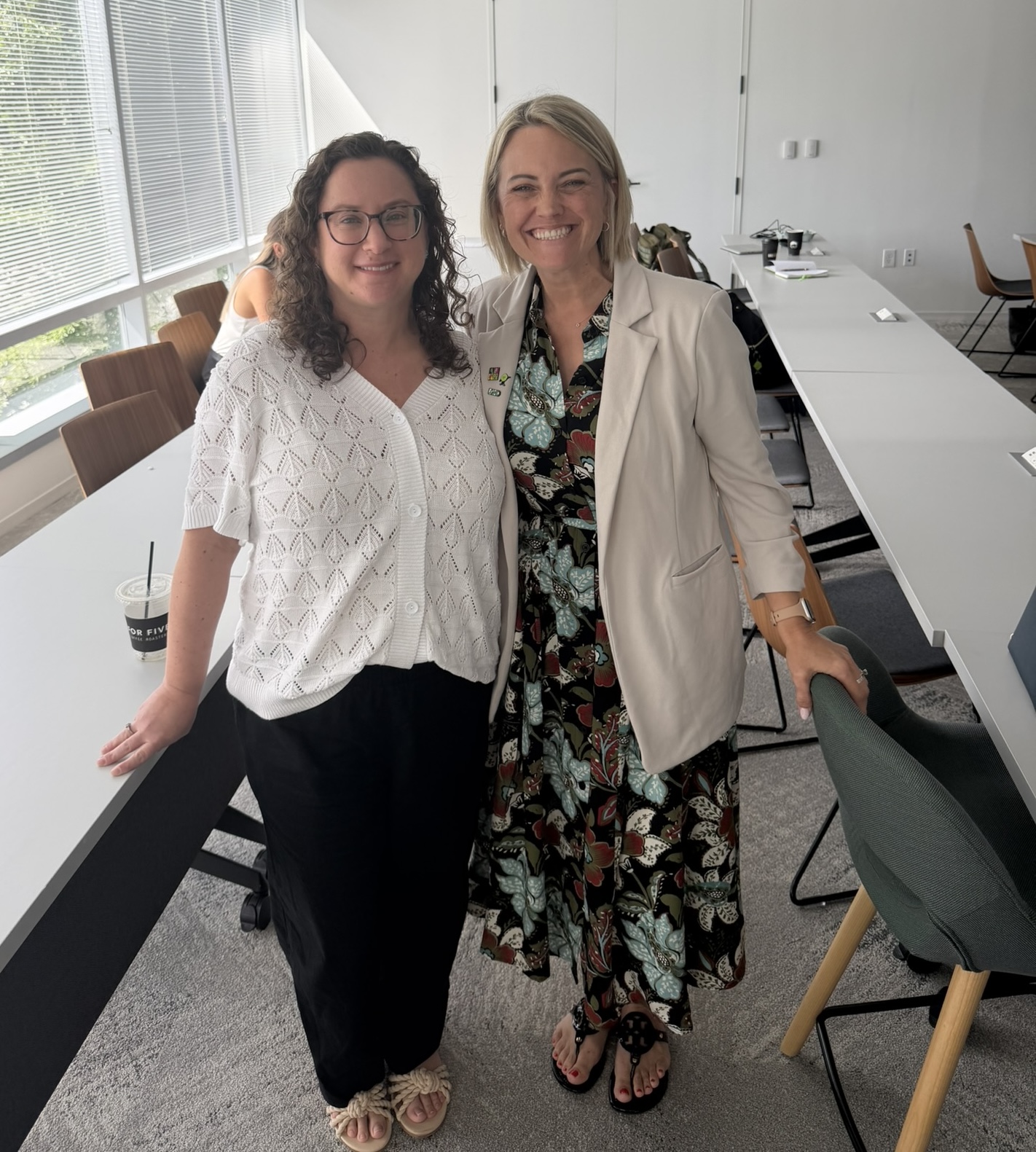
The trip also provided an opportunity to look ahead at the science of LGMD drug development. Melina joined C3 Scientific Director Jennifer Levy at an LGMD leaders meeting where they heard from Dr. Scott Berry about innovative clinical trial design and Dr. Peter Kang about what LGMD clinical trials may look like over the next several years. For C3, bringing the advocacy and scientific sides of our mission together is essential as we work toward treatments for calpainopathy.
WHAT WE ASKED CONGRESS TO DO
- Increase federal research funding for LGMD: Advocates asked Congress to preserve LGMD-specific report language in the final FY27 Labor-HHS appropriations bill and include LGMD as an eligible research area under the Department of Defense Peer-Reviewed Medical Research Program. The requested report language addresses critical needs including natural-history studies, biomarkers, clinical-trial endpoints and research into biological pathways shared across LGMD subtypes.
- Leverage FDA tools for rare-disease innovation: There are currently no FDA-approved treatments for LGMD. Advocates called for flexible, science-based approaches appropriate for ultra-rare and progressive diseases, including innovative trial designs, natural-history external controls, accelerated approval when the evidence supports it, basket and platform trials, totality-of-evidence approaches and meaningful patient-focused drug development. The community also advocated for permanent authorization of the Rare Pediatric Disease Priority Review Voucher Program, better coordination and use of existing natural-history data, and passage of the Scientific EXPERT Act (H.R. 1532/S. 822).
- Protect disability rights and home- and community-based services: Advocates discussed policies that affect the ability of people living with LGMD to remain at home, work, attend school and participate fully in their communities, including access to personal assistance, durable medical equipment, transportation, caregiver support and other home- and community-based services.
For C3, these conversations matter. Scientific progress alone isn’t enough. Research investment, innovative clinical-trial design, workable regulatory pathways for ultra-rare populations, incentives for drug development, and policies that allow patients to ultimately access treatments all have to move forward together.
C3 is grateful to The Speak Foundation for bringing advocates from across the LGMD community together in Washington and creating opportunities for patients and families to speak directly with policymakers. We are proud to have C3 represented at the table in conversations about the policies affecting our community today and the science that could change its future.