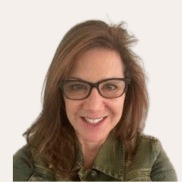
Melissa Spencer, PhD
ChairDr. Spencer is a Professor of Neurology and Director of the Neuromuscular Program at UCLA. For more than 25 years, her research has focused on understanding muscular dystrophies and translating scientific discoveries into new treatments. A major focus of Dr. Spencer’s laboratory is LGMD2A/R1, also known as calpainopathy. Her team studies the normal role of the calpain 3 protein in maintaining healthy muscle and investigates how mutations in the CAPN3 gene lead to progressive muscle weakness. The laboratory has developed disease models that have helped reveal important changes in muscle structure, metabolism, and repair caused by calpain 3 deficiency. Dr. Spencer’s team is also developing a gene therapy for LGMD2A/R1. This work includes designing genetic control elements that produce the right amount of calpain 3 in skeletal muscle while limiting expression in other organs, particularly the heart. Her laboratory is also evaluating improved delivery systems that could make gene therapy more effective and safer. More broadly, Dr. Spencer studies how the immune system responds to adeno-associated virus (AAV), the delivery vehicle used in many gene therapies. By analyzing patient samples and laboratory models with advanced single-cell and immunological methods, her team aims to identify immune responses that predict complications and to develop strategies for making AAV gene therapies safer. Dr. Spencer received the Presidential Early Career Award for Scientists and Engineers, one of the nation’s highest honors for early-career researchers. She serves on the National Institute of Arthritis and Musculoskeletal and Skin Diseases Advisory Council and has held scientific advisory roles with the Muscular Dystrophy Association and Parent Project Muscular Dystrophy.
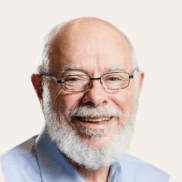
Kevin Campbell, PhD
Dr. Campbell is the Roy J. Carver Professor and Chair of the Department of Molecular Physiology and Biophysics and director of the Wellstone Muscular Dystrophy Specialized Research Center at the University of Iowa, and an investigator emeritus of the Howard Hughes Medical Institute. He received his BS in physics from Manhattan College and his PhD in biophysics from the University of Rochester. He completed his postdoctoral fellowship at the University of Toronto before becoming an assistant professor at the University of Iowa in 1981. Research in Dr. Campbell’s laboratory is focused on the molecular pathogenesis of muscular dystrophies and the development of therapeutic strategies to treat muscular dystrophies. In particular, the laboratory focuses on the dystrophin-glycoprotein complex that links the cytoskeleton to the extracellular matrix in skeletal muscle. Dr. Campbell’s work has been recognized through a number of awards including the INSERM/Academie de Sciences Prix, the Amgen Award, the Duchenne-Erb-Preis Award, MDA Scientific Achievement Award, and the March of Dimes Prize in Developmental Biology. Dr. Campbell was elected to the Institute of Medicine, the National Academy of Sciences, and the American Academy of Arts and Sciences. In 2016, he was elected as a Lifetime Achievement Fellow by the American Society for Cell Biology. Dr. Campbell also is the recipient of the American Society for Biochemistry and Molecular Biology Herbert Tabor Research Award.
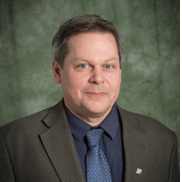
Eric Hoffman, PhD
Dr. Hoffman received BA degrees in Biology and Music from Gettysburg College, PhD in Drosophila genetics from Johns Hopkins University, and carried out post-doctoral work and initial faculty appointments at Boston Children’s Hospital, Harvard Medical School. Subsequent faculty appointments were at the University of Pittsburgh School of Medicine, Children’s National Medical Center and George Washington University (CNMC/GW), and State University of New York at Binghamton (2016-present). While at CNMC/GW, he established the Cooperative International Neuromuscular Research Group, and led the spin-off of three companies in the neuromuscular disease area: ReveraGen, AGADA, and TRiNDS. He remains CEO of both ReveraGen and AGADA. Dr. Hoffman’s laboratory work has focused on translational research in neuromuscular disease and muscle physiology. His early work as a post-doctoral fellow led to the discovery of dystrophin deficiency as the cause of Duchenne muscular dystrophy. He has defined the molecular pathogenesis (gene to clinical symptoms) in dystrophinopathies, laminopathies, limb-girdle muscular dystrophies, and ion channelopathies, among others. The advances in genetics and molecular pathophysiology were then translated by Dr. Hoffman into successful development of two novel therapeutic approaches for Duchenne muscular dystrophy – exon skipping (viltolarsen), and vamorolone.
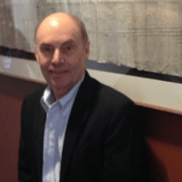
Louis M. Kunkel, PhD
Dr. Kunkel is an internationally recognized geneticist with years of experience and scientific success in the understanding of the molecular basis for the muscular dystrophies. He received a B.A. from Gettysburg College and his Ph.D. from Johns Hopkins University. Over the past three decades Dr. Kunkel has devoted his career to understanding the molecular basis, and developing therapy, for neuromuscular disorders. Dr. Kunkel is universally recognized for the discovery of the genes responsible for muscular dystrophy and other neuromuscular disorders. He has been involved in the identification of genes altered to cause muscular dystrophy since his 1986 identification of dystrophin as the causative gene in Duchenne muscular dystrophy. His current work centers on developing dystrophin independent therapies for Duchenne muscular dystrophy to complement existing therapies currently in development. A past Howard Hughes Investigator and member of the National Academy of Sciences, Dr. Kunkel has received numerous awards for his research including the Wellcome Trust Prize and the Gairdner Foundation International Award. Dr. Kunkel currently is a member of the Division of Genetics and Genomics at Boston Children’s Hospital; and Professor of Pediatrics and Genetics, Harvard Medical School, Boston.
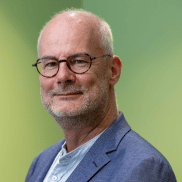
Volker Straub, MD, PhD
Dr. Straub is the Director of the John Walton Muscular Dystrophy Research Centre and Director of the Newcastle University Centre of Research Excellence for Rare Disease in Newcastle upon Tyne, UK. He is an MD/PhD and a Consultant in Neuromuscular Genetics and Paediatrics. In his roles, he supports the translation of fundamental disease mechanisms from the laboratory into patients through observational studies and drug trials. Volker has a long-standing interest in the pathogenesis of genetic muscle diseases, with research involving disease models, the application of imaging technologies, next generation sequencing, and machine learning. He is an investigator for several natural history studies and interventional trials. Volker has been involved in the coordination of many EU-funded research projects and networks. He was the grant holder, founder and co-coordinator of TREAT-NMD, an EU funded network of excellence for genetic neuromuscular diseases. The network has now become a global alliance for translational research and provides services for industry, clinicians and scientists to bring novel therapeutic approaches into the clinic. Volker is an Executive Board member of the World Muscle Society and an author on >500 peer-reviewed publications.