Limb-Girdle Muscular Dystrophy 2A/R1 (LGMD2A/R1) is caused by changes in a gene called CAPN3, which provides instructions for making a protein called Calpain 3. This protein is specific to skeletal muscle and, among other functions, helps regulate calcium levels inside muscle cells. In 2022, C3 awarded a research grant to Drs. Elisabeth Barton and Lan Wei-LaPierre of the University of Florida to clarify how calcium, which is a key regulator of exercise response, is affected when Calpain 3 is absent. The results of their project were published this month in the FASEB Journal. Full text of the article can be accessed here.
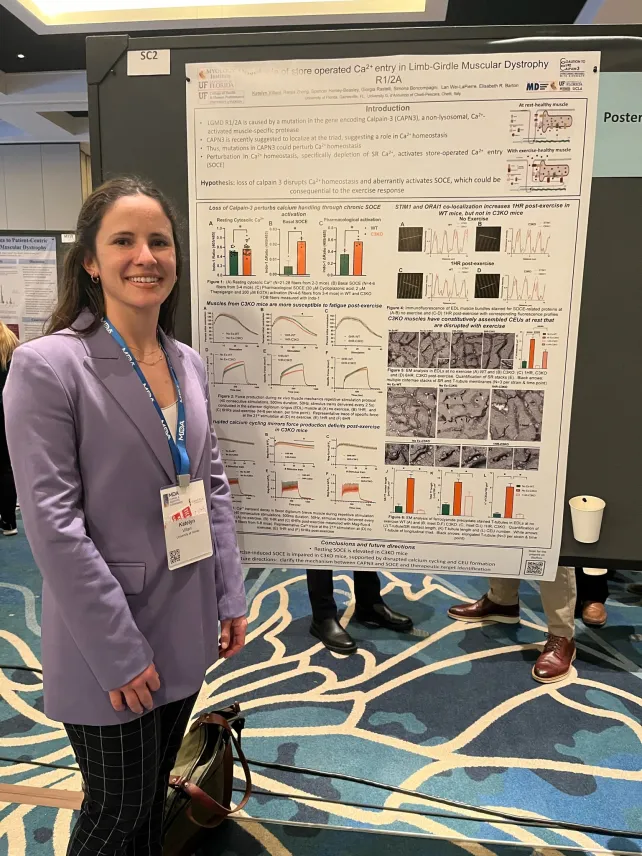
In a study comparing mice lacking Calpain 3 (C3KO) with normal mice, the researchers investigated how the absence of Calpain 3 affects Store-Operated Calcium Entry (SOCE), a process crucial for muscle function. When at rest, the C3KO mice had higher levels of SOCE than normal mice, leading to elevated levels of calcium inside the cells.
After treadmill exercise, the researchers observed that muscles in C3KO mice were weaker and had disrupted calcium handling during repetitive muscle contractions compared to muscles in normal mice. This suggests that Calpain 3 helps muscles respond to exercise by regulating calcium entry.
High-powered microscopy analysis revealed that in muscles lacking Calpain 3, key proteins involved in calcium entry (STIM1 and ORAI1) did not interact properly, disrupting the muscle’s ability to control calcium levels in response to exercise.
In summary, the study demonstrates that Calpain 3 is essential for maintaining proper calcium handling in skeletal muscles. Its absence or dysfunction, as seen in LGMD2A/R1, leads to impaired calcium regulation during muscle activity. These findings provide insights that could aid in understanding and potentially treating this type of muscular dystrophy in the future.