A paper published by Jason Berman, Children’s Hospital of Eastern Ontario Research Institute and University of Ottawa, along with colleagues from Dalhousie University, AGADA Biosciences, and Binghamton University – State University of New York, shares the development of a zebrafish model of LGMD2A/R1.
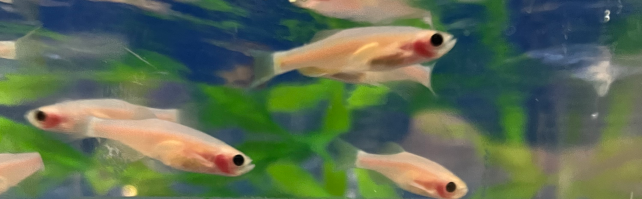
Zebrafish are often used to study genetic disorders because they grow and reproduce quickly, their genetics are well-understood, and they are inexpensive to maintain. In the current study, the authors generated lines that lack the zebrafish version of Calpain 3. Under normal conditions, these lines had none of the hallmarks of muscular dystrophy. However, challenging the fish by keeping them in a viscous solution revealed that the new lines were more susceptible to muscle damage than their normal counterparts. Similarly, the Calpain 3-deficient fish were more prone to muscle damage when exposed to a chemical that causes hyperactivation of the muscle.
Since the Calpain 3-deficient fish are susceptible to muscle damage, they can be studied to better understand how mutations in the human gene lead to LGMD2A/R1 symptoms. They also can be used to screen drugs that have the potential to treat LGMD2A/R1. Unlike mice, zebrafish are permeable to small molecule drugs. Researchers can design assays where candidate compounds are added to the swimming water and fish are evaluated for muscle damage. Drugs that protect the muscle can then be tested in other disease models or – if they are recognized as safe – in humans.
THIS PROJECT WAS FUNDED IN PART BY A RESEARCH GRANT FROM COALITION TO CURE CALPAIN 3. WITH CONTINUED FUNDING FROM C3, RESEARCHERS FROM AGADA BIOSCIENCES WILL UTILIZE THIS MODEL TO TEST SEVERAL CANDIDATE DRUGS.
The full text of the paper is available on the Genes website